

FOR IMMEDIATE RELEASE
Cambridge, UK – [Insert Current Date] – In an era defined by rapid technological obsolescence, the preservation of computing history stands as a critical endeavor. Among the hallowed artifacts of early portable computing is the Epson HX-20, often hailed as the world’s first true laptop. Released in 1981, this groundbreaking machine pioneered mobile productivity, yet its reliance on archaic microcassette tape drives has rendered many units increasingly difficult to operate. Now, thanks to the ingenuity of independent developer Andrew Menadue, a modern, robust solution has emerged, leveraging the versatile Raspberry Pi Pico to breathe new life into these vintage devices.
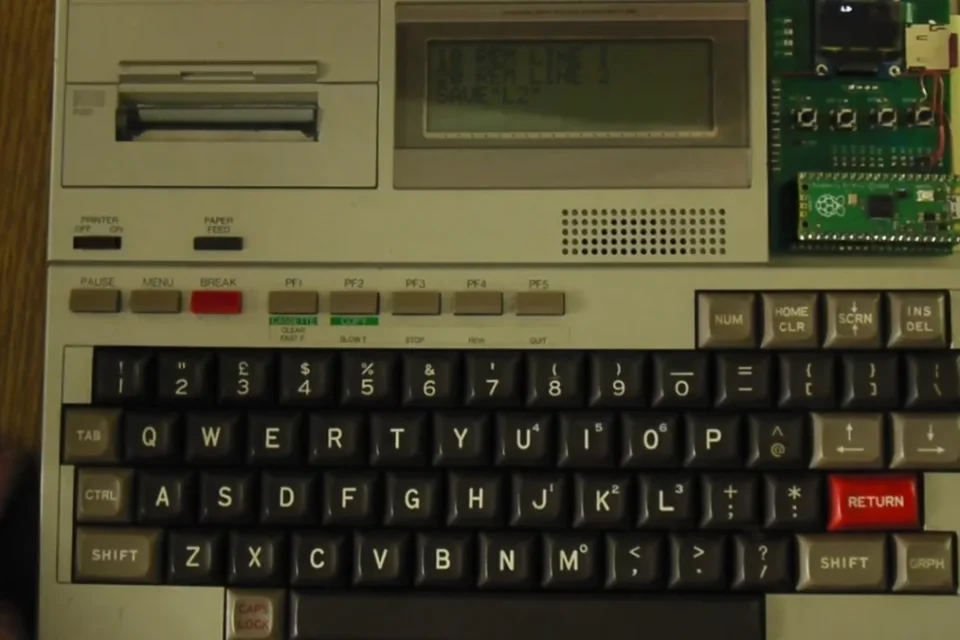
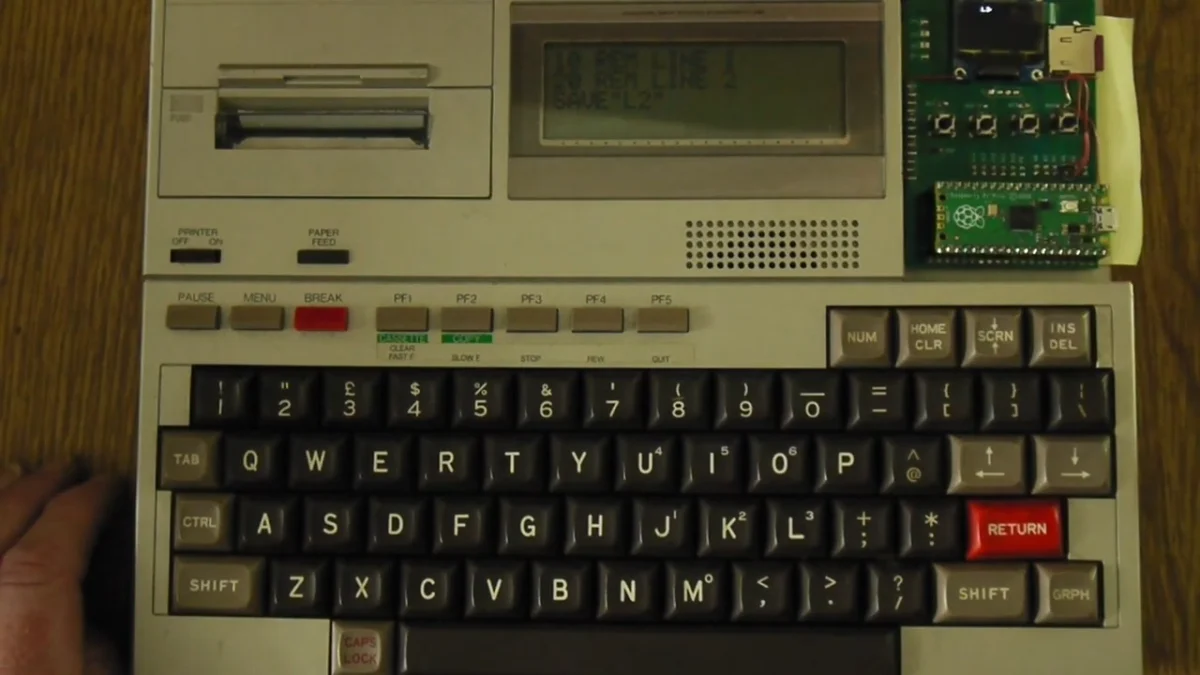
Menadue’s innovative replacement drive, detailed in a recent demonstration, meticulously emulates the original microcassette mechanism. By substituting fragile magnetic media with a reliable microSD card and integrating a user-friendly interface, this project not only sidesteps the pervasive issues of tape degradation and mechanical failure but also expands the HX-20’s capabilities, including the emulation of scarce ROM cartridges. This development marks a significant stride in the retrocomputing community’s ongoing efforts to safeguard and reactivate the digital heritage of past generations.
The Main Facts: Bridging Decades of Computing
The Epson HX-20 holds a special place in the annals of computing history. Launched over four decades ago, it predated the widespread adoption of laptops, offering unprecedented portability in a compact form factor. However, its primary data storage method – a built-in microcassette drive – has become its Achilles’ heel. These tiny magnetic tapes, along with their intricate mechanical drives, are highly susceptible to wear, degradation, and eventual failure, making it challenging for enthusiasts and historians to keep these machines functional.
Andrew Menadue’s solution directly addresses this critical vulnerability. At its core, the replacement drive is powered by a Raspberry Pi Pico, a diminutive yet powerful microcontroller renowned for its flexibility and low cost. The Pico is programmed to meticulously mimic the electrical signals and data transfer protocols of the original microcassette drive, effectively fooling the HX-20 into believing it’s interacting with its native storage system. Instead of unreliable tape, data is now stored on a modern microSD card, offering vastly superior longevity, capacity, and ease of use.
The device boasts a small integrated screen and four navigational buttons, providing a straightforward interface for users to select which "tape" or "ROM cartridge" the Pico should emulate. This dual functionality – acting as both a virtual tape drive and a ROM cartridge emulator – significantly enhances the utility and accessibility of the HX-20, opening up a treasure trove of software that was once locked behind failing hardware or rare, expensive physical media. Menadue’s project exemplifies the creative problem-solving prevalent in the retrocomputing community, demonstrating how contemporary technology can respectfully and effectively preserve the functionality of historical machines.
Chronology: From Early Pioneer to Modern Revival
The Birth of a Vision: The Epson HX-20’s Genesis (1981)
The story of the Epson HX-20 begins in 1981, when Seiko Epson Corporation unveiled what many consider the world’s first laptop computer. Marketed as "The Notebook Computer," the HX-20 was a marvel of miniaturization for its time. It featured a full-travel keyboard, a built-in dot matrix printer, and an innovative 20-column by 4-line LCD screen. Powered by dual Hitachi 6301 CPUs (an enhanced Motorola 6801 derivative), it offered 16KB of RAM (expandable to 32KB) and ran a proprietary operating system. Its primary appeal lay in its portability, allowing users to take computing power beyond the confines of a desktop.
Crucially, for data storage, the HX-20 integrated a microcassette drive. While revolutionary for mobile data storage at the time, offering a degree of permanence that RAM alone could not, this choice would eventually become its greatest weakness. Early software distribution also included ROM cartridges, offering instant-on applications, but these too were finite in number and increasingly difficult to acquire.
The Inevitable Decay: A Looming Threat to Legacy Hardware
As decades passed, the inherent vulnerabilities of the HX-20’s original storage mechanisms began to manifest. Magnetic tape, by its very nature, is susceptible to degradation. Tapes can stretch, snap, or shed their magnetic coating, leading to irreversible data loss. The delicate mechanical components of the microcassette drives – belts, motors, read/write heads – are prone to wear and failure. Lubricants dry out, plastics become brittle, and electrical contacts corrode. This makes routine maintenance a challenge, often requiring specialized knowledge and parts that are no longer manufactured.
For retrocomputing enthusiasts, collectors, and digital archivists, the failing microcassette drives presented a significant barrier to experiencing the HX-20 as it was originally intended. Without reliable storage, the machine became little more than an inert display piece, its historical software inaccessible. The scarcity of functional original drives and pristine microcassettes drove the need for a sustainable, modern alternative.
The Genesis of a Modern Solution: Andrew Menadue’s Intervention
It was against this backdrop of escalating obsolescence that Andrew Menadue embarked on his project. Motivated by the desire to preserve the HX-20’s operational integrity, Menadue recognized the potential of modern microcontrollers to emulate the intricate behaviors of vintage hardware. The challenge lay in reverse-engineering the precise timing, voltage levels, and data protocols that the HX-20 expected from its microcassette drive.
His development process likely involved extensive experimentation, oscilloscope measurements, and iterative firmware coding. The selection of the Raspberry Pi Pico was a strategic one, offering a powerful yet cost-effective platform with ample GPIO pins to interface with the HX-20’s expansion port and sufficient processing power to handle real-time emulation. The integration of a microSD card slot provided the necessary leap from unreliable analog storage to robust digital media. Menadue’s work represents a significant milestone in the community-driven effort to ensure that pioneering machines like the Epson HX-20 remain not just visible, but truly interactive.
Supporting Data: The Technical Heart of Preservation
The Epson HX-20: A Deeper Dive into its Architecture
To fully appreciate Menadue’s achievement, one must understand the original machine. The Epson HX-20, released as the HC-20 in Japan, was a sophisticated device for its time. Its dual Hitachi 6301 microprocessors were a key feature; one served as the main CPU, while the other handled peripheral tasks like the screen, keyboard, and printer, allowing for more efficient operation. Its 16KB of RAM was expandable to 32KB, and it boasted a character-based LCD display of 20 columns by 4 lines, providing a stark contrast to today’s high-resolution screens.
The microcassette drive, typically located on the left side of the unit, was a standard Philips-type microcassette mechanism, adapted for digital data storage. Data was encoded as audio tones and written to the magnetic tape. While ingenious for its time, this method was slow, sequential, and highly prone to error due to tape stretching, head misalignment, and magnetic degradation. ROM cartridges, on the other hand, offered instant program loading by mapping their memory directly into the HX-20’s address space, but their fixed nature meant they couldn’t save user data.
Deconstructing the Problem: The Frailties of Microcassette Technology
The challenges with the HX-20’s original storage are multifaceted. Microcassettes, like all magnetic media, suffer from "bit rot" – the gradual weakening and reorientation of magnetic particles over time, leading to data corruption. Physical wear and tear on the tape itself (stretching, creasing) further exacerbate these issues. The drives are complex electromechanical systems: rubber belts perish, motors seize, gears strip, and read/write heads become contaminated or misaligned. Finding replacement parts for these decades-old, proprietary mechanisms is virtually impossible.
Moreover, the process of reading data from these tapes is inherently slow and requires meticulous calibration. Data transfer rates were measured in mere hundreds of bits per second, a stark contrast to the megabytes per second of even rudimentary modern storage. For users attempting to load programs or save files, this meant agonizingly long waits and frequent failures, making the HX-20’s once-pioneering functionality increasingly impractical.
Andrew Menadue’s Ingenious Solution: A Technical Breakdown
Menadue’s solution is a testament to clever engineering and deep understanding of both vintage and modern electronics.
- The Raspberry Pi Pico at its Core: The choice of the Raspberry Pi Pico (powered by the RP2040 microcontroller) is pivotal. Its dual-core ARM Cortex-M0+ processor provides ample computational power to handle the real-time demands of tape emulation. Its low cost makes the solution accessible, and its extensive GPIO (General Purpose Input/Output) pins are crucial for interacting with the HX-20’s peripheral bus. The Pico’s ability to run at high clock speeds and its programmable I/O (PIO) state machines are particularly useful for generating precise timing signals required to emulate the HX-20’s data transfer protocols.
- Emulation in Action: The core of the project is the custom firmware running on the Pico. This firmware intercepts commands from the HX-20 that would normally control the microcassette drive (e.g., play, record, stop, fast forward/rewind). It then translates these commands into actions on the microSD card. Conversely, when the HX-20 requests data, the Pico retrieves the appropriate file from the microSD card and streams it back, modulated into the correct audio-like signals that the HX-20’s tape interface expects. The challenge here is not just data transfer, but accurately replicating the timing and electrical characteristics of the original drive’s interface.
- Modern Storage: The MicroSD Advantage: The shift from microcassettes to microSD cards is a monumental upgrade. MicroSD cards are solid-state, meaning no moving parts, dramatically increasing reliability and resistance to physical shock. They offer vast storage capacities (gigabytes compared to kilobytes) and significantly faster data access. Their longevity is measured in decades, not years, and they are readily available and inexpensive. This eliminates the twin threats of media degradation and mechanical failure.
- User Interface and Versatility: The small screen and four navigation buttons provide a simple, intuitive user experience. Users can browse a directory of virtual "tapes" or "ROMs" stored on the microSD card, select the desired program, and "load" it into the HX-20. This obviates the need for physical tape manipulation and the frustrating trial-and-error often associated with vintage tape systems. The ability to emulate ROM cartridges is an especially valuable addition, as these are often even rarer and more expensive than working tape drives. This means that once-unobtainable software can now be easily accessed and run.
The Broader Context of Digital Preservation and Drive Upgrades
Menadue’s project is not an isolated incident but part of a larger, global movement within the retrocomputing community. Similar drive upgrade solutions have emerged for various vintage systems, addressing the universal problem of failing mechanical storage. Examples include:
- SCSI device emulators: Projects that replace old, large, and failure-prone SCSI hard drives with modern SD cards or solid-state drives, often using microcontrollers or FPGAs.
- Floppy disk emulators (e.g., Gotek drives): These popular devices replace physical floppy drives with USB flash drive interfaces, allowing users to store hundreds of virtual floppy disk images on a single USB stick.
- Hard drive emulators: Solutions for older IDE or MFM hard drives that use SD cards or CompactFlash cards for storage.
These initiatives underscore a crucial truth: mechanical drives and their associated media simply do not last forever. As platforms like Hackaday regularly highlight, the "end of an era" for various forms of writable optical media (CDs, DVDs) further emphasizes the impermanence of physical storage. The shift towards solid-state, digitally managed storage is not just an upgrade in convenience but a fundamental necessity for long-term digital preservation. Andrew Menadue’s work on the HX-20 stands as a shining example of this essential paradigm shift.
Community Reception and Implications: Sustaining Legacies
A Warm Welcome from the Retrocomputing Community
The retrocomputing community has greeted Menadue’s invention with considerable enthusiasm. Such projects are invaluable, as they directly address the biggest pain points in keeping vintage hardware alive and usable. Forums, social media, and dedicated retrocomputing websites are abuzz with discussions about similar innovations. The open-source nature of many such projects fosters a collaborative environment where knowledge is shared, improvements are made, and historical machines become more accessible to a wider audience.
This community-driven innovation is critical because original manufacturers no longer support these devices. The responsibility for preservation falls squarely on the shoulders of enthusiasts, hobbyists, and digital historians. Menadue’s work not only provides a practical solution but also inspires others to tackle similar challenges for different machines, creating a virtuous cycle of preservation and innovation.
Implications for Retrocomputing and Digital Heritage
The implications of projects like Andrew Menadue’s extend far beyond simple nostalgia:
- Sustaining Legacies: By providing reliable, modern storage solutions, these projects ensure that early computing milestones like the Epson HX-20 remain functional. This is vital for historical research, allowing academics and enthusiasts to study the evolution of computing hands-on, rather than relying solely on emulators or non-functional relics. It keeps the "living history" of computing alive.
- Educational Value: Functional vintage computers offer unparalleled educational opportunities. Students and curious minds can interact directly with the hardware and software that defined early personal computing, gaining a tangible understanding of how technology has progressed. They can learn about early operating systems, programming languages, and user interfaces in their original context.
- Accessibility and Democratization: Rare and fragile original media often makes accessing software for vintage machines prohibitively expensive or impossible. By replacing these with modern, easily available digital storage (like microSD cards), projects like Menadue’s democratize access to historical software. This means more people can experience the HX-20 without needing to hunt down scarce tapes or ROM cartridges.
- The Future of Preservation: As more and more digital formats become obsolete, the need for innovative preservation strategies will only grow. Menadue’s project serves as a blueprint for future endeavors, demonstrating that flexible, microcontroller-based emulation is a powerful tool in the fight against digital decay. It highlights the ongoing necessity for reverse engineering, firmware development, and hardware hacking in the service of heritage.
- Open-Source Philosophy: The success of many retrocomputing preservation efforts is deeply rooted in the open-source philosophy. The sharing of designs, code, and knowledge allows for rapid iteration and community-wide improvements, ensuring that solutions are robust and widely adopted. This collaborative spirit is essential for tackling the vast and diverse challenges of preserving computing history.
In conclusion, Andrew Menadue’s Raspberry Pi Pico-powered replacement drive for the Epson HX-20 is more than just a clever hack; it’s a vital piece of digital archaeology and a beacon for the future of retrocomputing. By ingeniously blending modern microelectronics with vintage hardware, it ensures that a significant piece of technological heritage remains vibrant, accessible, and ready to inspire generations to come. It stands as a powerful reminder that with creativity and dedication, even the most challenging aspects of technological obsolescence can be overcome.
